DIY Modular High-Vacuum System
DIY Modular High-Vacuum System
DIY Modular High-Vacuum System
One of my most ambitious personal projects.
One of my most ambitious personal projects.
Background
Background
Background
From the first moment interacting with a high vacuum system, I was completely captivated. On their own they are marvels of engineering; systems where the most minute levels of gas can not only be detected but also ruin an experiment. But arguably more incredible is the science that can be carried out in such a unique environment. I find myself continuously enamored by electrostatic fusors, electron beams, physical vapor deposition, and more.
Unfortunately, purchasing a proper COTS high vacuum chamber with a graduate student's hobby budget is not possible. Unable to kick the desire to run these experiments in my own space, I found my only option to build my own high vacuum chamber and pumping system.
From the first moment interacting with a high vacuum system, I was completely captivated. On their own they are marvels of engineering; systems where the most minute levels of gas can not only be detected but also ruin an experiment. But arguably more incredible is the science that can be carried out in such a unique environment. I find myself continuously enamored by electrostatic fusors, electron beams, physical vapor deposition, and more.
Unfortunately, purchasing a proper COTS high vacuum chamber with a graduate student's hobby budget is not possible. Unable to kick the desire to run these experiments in my own space, I found my only option to build my own high vacuum chamber and pumping system.
Initial Thoughts and Design
Initial Thoughts and Design
Initial Thoughts and Design
Very early on, I determined that a project of this magnitude would need to be broken down into smaller parts, and some bounds would need to be set. Importantly, I am a graduate student working with limited time and an even more limited budget. This meant that, as often as possible, I would need to purchase components second hand or build them from scratch myself.
With these thoughts in mind, I first wanted to try tackling the vacuum system itself. While I knew that I would eventually need a full two-stage vacuum system to reach the true "high-vacuum" regime, I started with a single stage pump. Or rather, the suction end of a refrigerator compressor salvaged from a broken refrigerator.
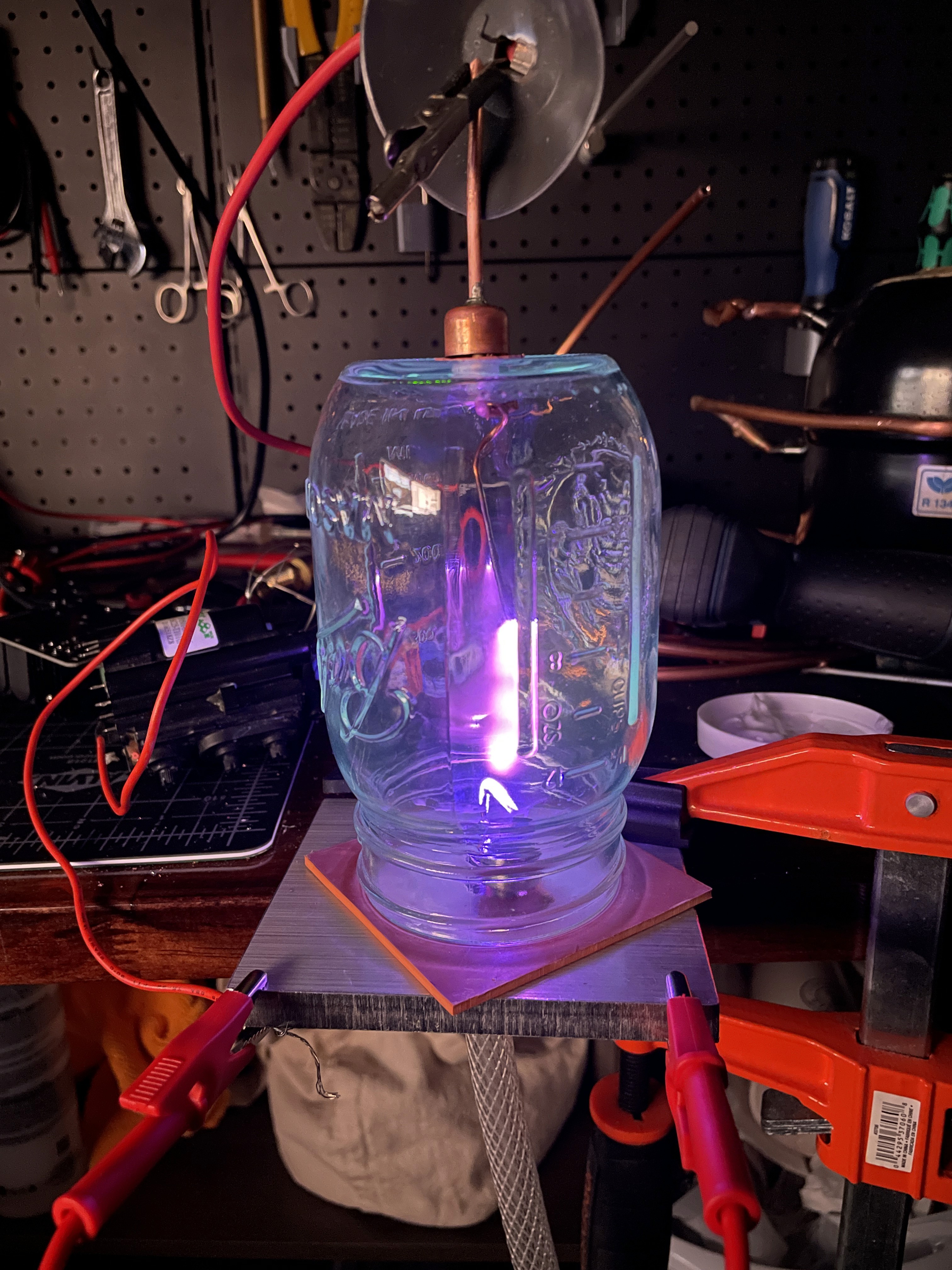
My first low pressure arc discharge was demonstrated with a mason jar, tapped aluminum "lid", and a soldered copper electrical feedthrough.
Very early on, I determined that a project of this magnitude would need to be broken down into smaller parts, and some bounds would need to be set. Importantly, I am a graduate student working with limited time and an even more limited budget. This meant that, as often as possible, I would need to purchase components second hand or build them from scratch myself.
With these thoughts in mind, I first wanted to try tackling the vacuum system itself. While I knew that I would eventually need a full two-stage vacuum system to reach the true "high-vacuum" regime, I started with a single stage pump. Or rather, the suction end of a refrigerator compressor salvaged from a broken refrigerator.
My first low pressure arc discharge was demonstrated with a mason jar, tapped aluminum "lid", and a soldered copper electrical feedthrough.
Acquisition of Vacuum Pumps and Gauge
Acquisition of Vacuum Pumps and Gauge
Acquisition of Vacuum Pumps and Gauge
These initial experiments made it immediately obvious that a true vacuum system was going to be needed. At this time, I was able to acquire two pumps: a used Varian DS102 rotary vane pump and a used Edwards nEXT400IID turbo molecular pump.
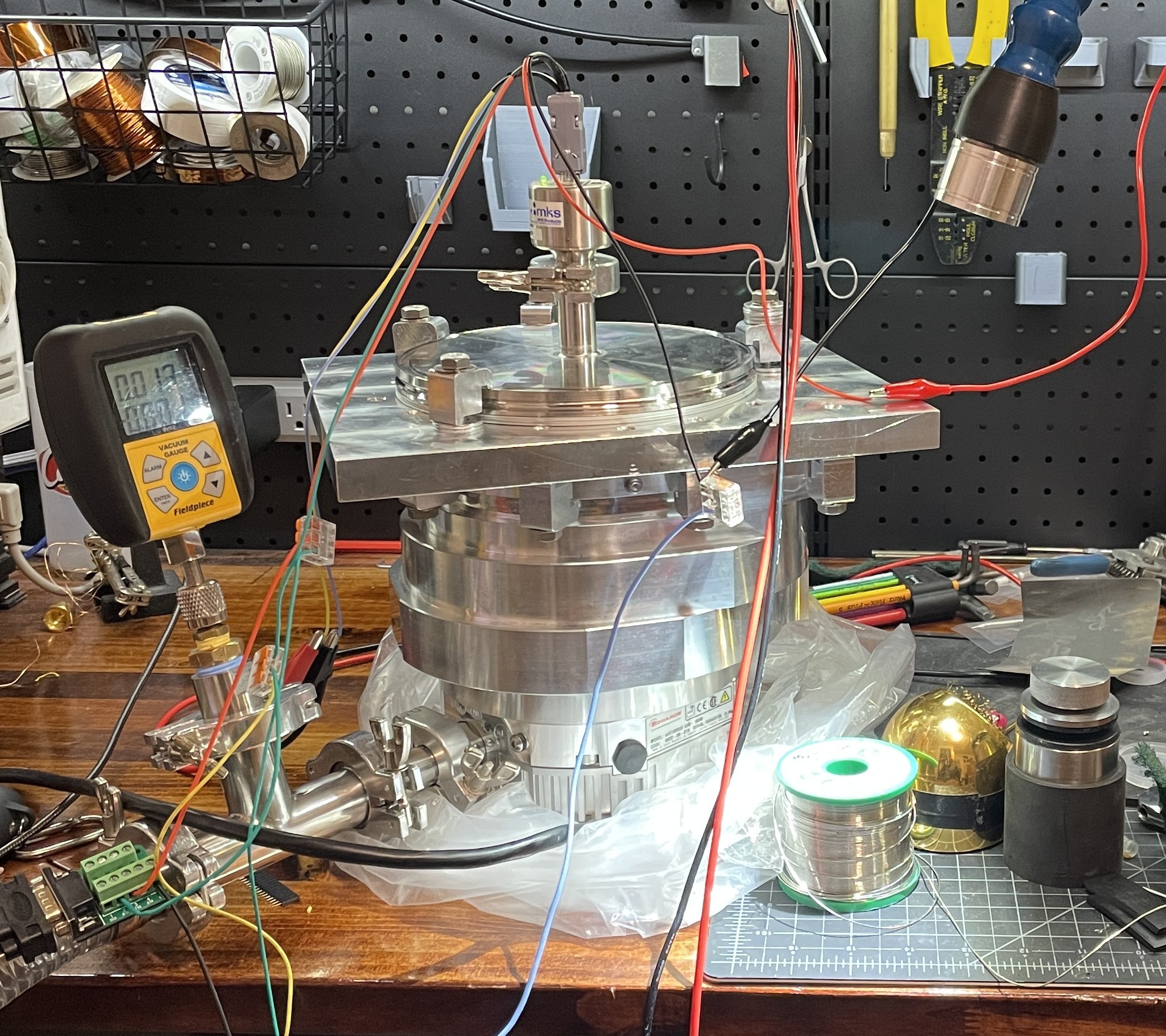
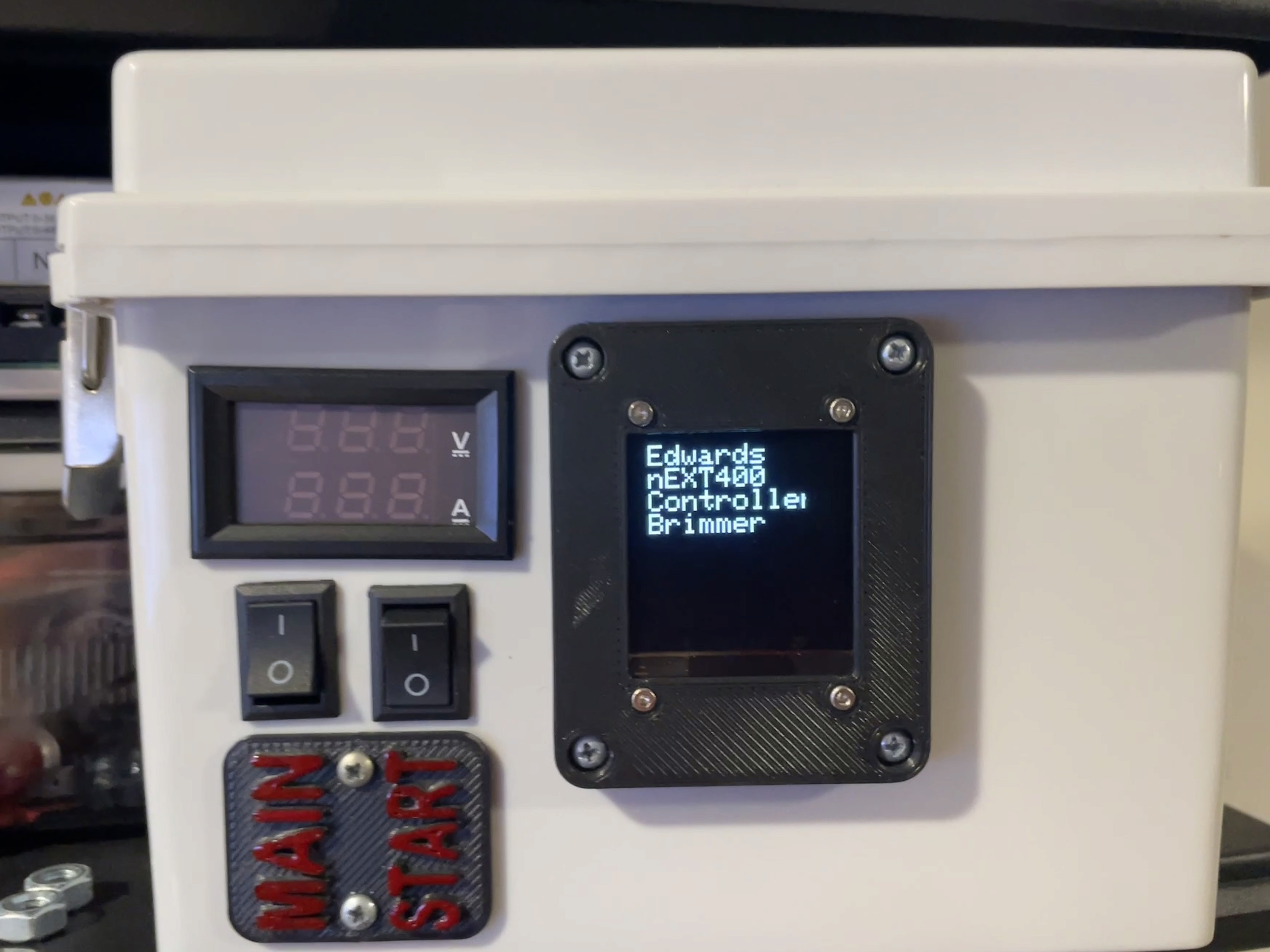
After some general upkeep and some new seals, the Varian roughing pump was ready for use and pulling quickly to ~10^-2 torr. However, the turbo pump required a lot more work. Data is difficult to find but this pump was supposedly a working pull from a tightly integrated piece of high vacuum equipment so came with a non-standard vacuum flange. To remedy this a custom adapter was machined on a manual mill from a piece of aluminum stock to adapt the unknown flange to a standard ISO160 type. Additionally, an Arduino control unit was created to allow speed readouts and control over spin up/down parameters.
These initial experiments made it immediately obvious that a true vacuum system was going to be needed. At this time, I was able to acquire two pumps: a used Varian DS102 rotary vane pump and a used Edwards nEXT400IID turbo molecular pump.
After some general upkeep and some new seals, the Varian roughing pump was ready for use and pulling quickly to ~10^-2 torr. However, the turbo pump required a lot more work. Data is difficult to find but this pump was supposedly a working pull from a tightly integrated piece of high vacuum equipment so came with a non-standard vacuum flange. To remedy this a custom adapter was machined on a manual mill from a piece of aluminum stock to adapt the unknown flange to a standard ISO160 type. Additionally, an Arduino control unit was created to allow speed readouts and control over spin up/down parameters.
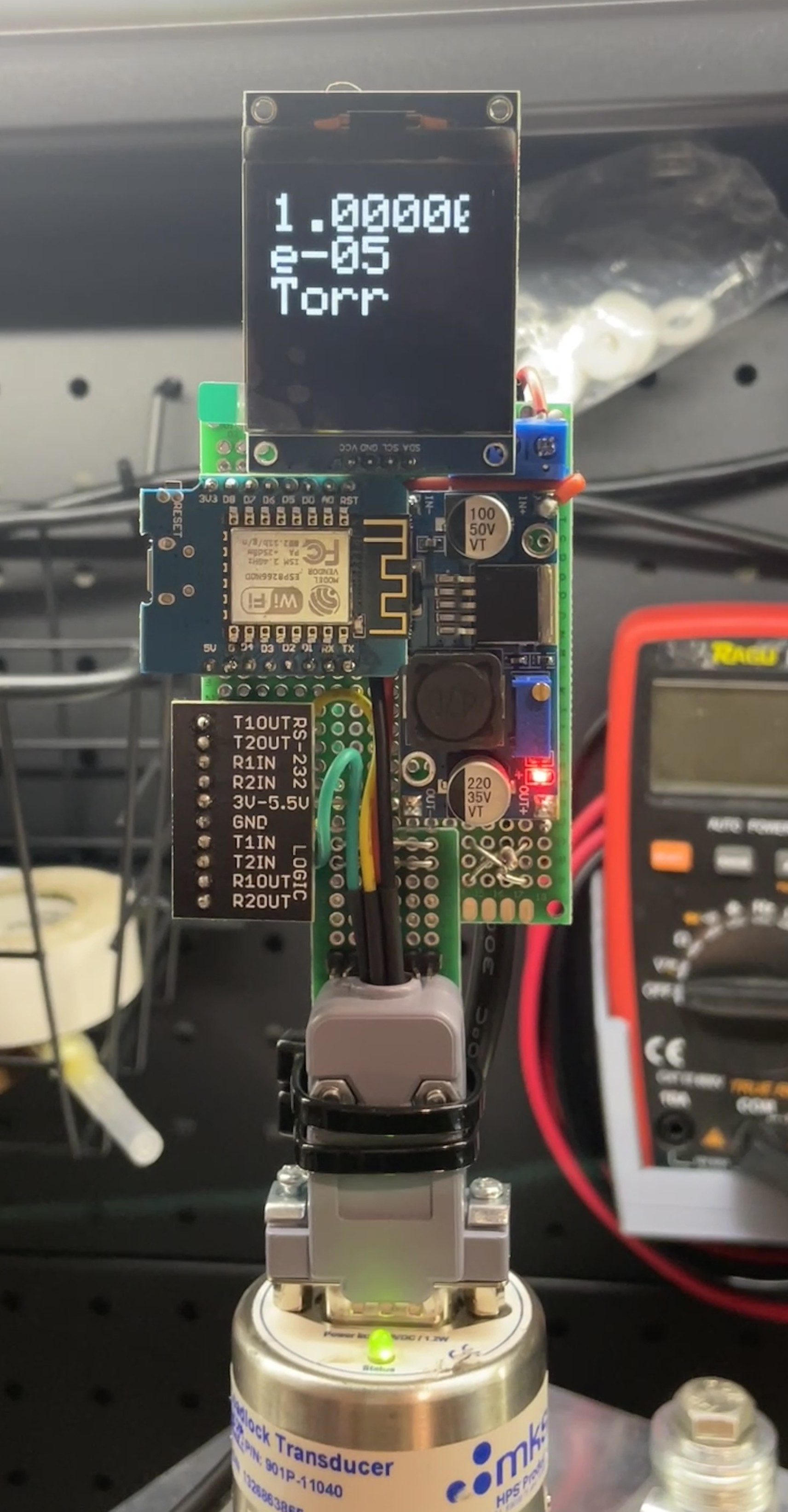
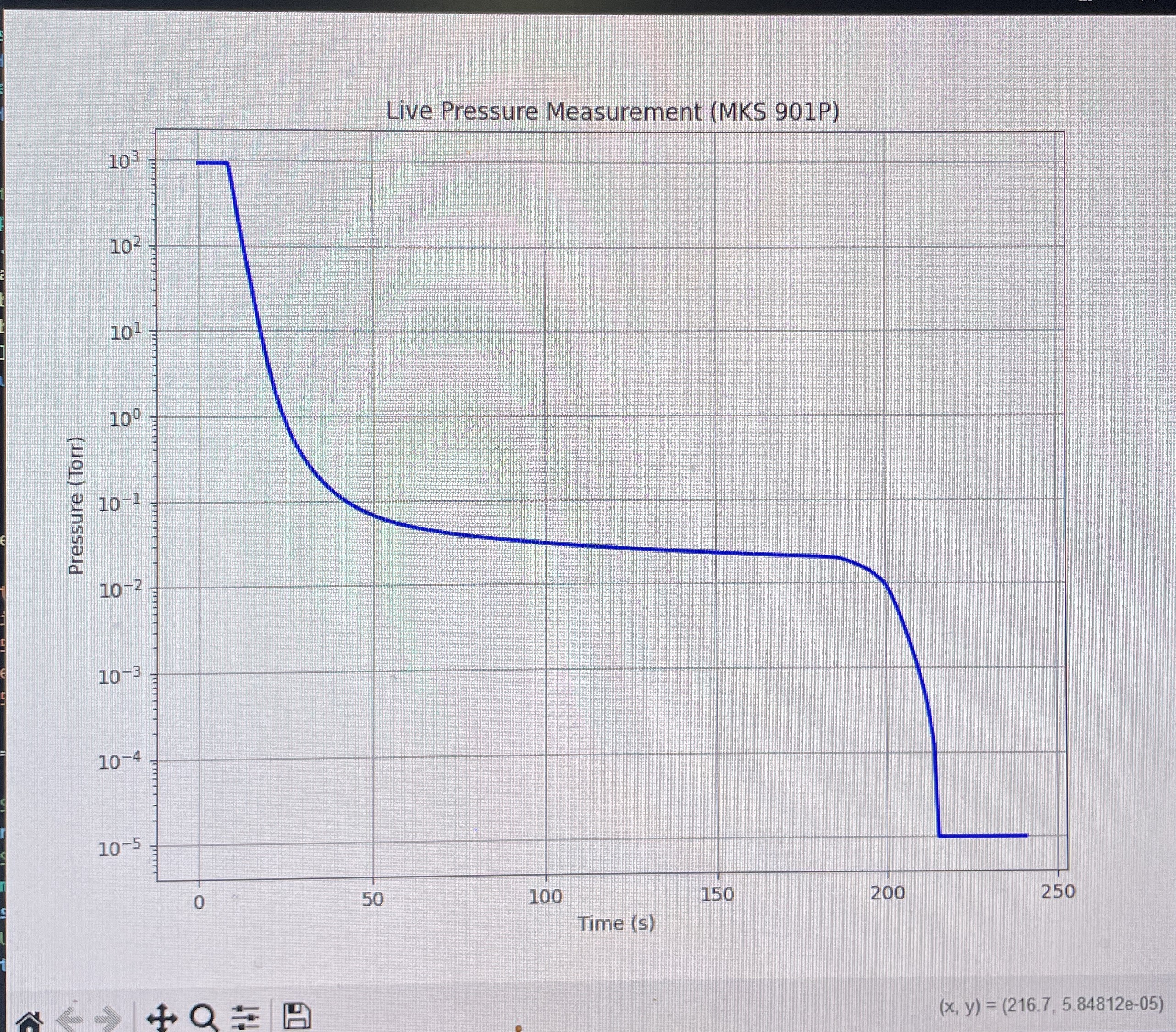
At the same time, a used MKS 901P vacuum transducer was purchased since my first gauge could not measure below 10^-3 torr. This transducer received its own DIY control unit for easy readout and powering. With these upgrades I finally crossed the high vacuum barrier with pressures below 10^-5 torr, maxing out my gauge's ability to measure.
At the same time, a used MKS 901P vacuum transducer was purchased since my first gauge could not measure below 10^-3 torr. This transducer received its own DIY control unit for easy readout and powering. With these upgrades I finally crossed the high vacuum barrier with pressures below 10^-5 torr, maxing out my gauge's ability to measure.
Construction of Primary Chamber
Construction of Primary Chamber
Construction of Primary Chamber
With a functional vacuum system tested and working, the construction of a proper high vacuum chamber could begin. With the turbo pump adapter having a ISO160 flange, it made the most sense to build something to directly attach to this. The most cost effective solution to this was to buy an ISO160 tee. This part could be found cheaply from overseas sellers and featured two full ISO160 flanges for future expansion. Unfortunately the lack of potential ports quickly became a limiting factor.
This was remedied by cutting into the tee and welding in KF25 and KF50 stubs. The end result is an ISO160 tee with two free ISO160 flanges, two KF25 flanges, and two KF50 flanges.
With a functional vacuum system tested and working, the construction of a proper high vacuum chamber could begin. With the turbo pump adapter having a ISO160 flange, it made the most sense to build something to directly attach to this. The most cost effective solution to this was to buy an ISO160 tee. This part could be found cheaply from overseas sellers and featured two full ISO160 flanges for future expansion. Unfortunately the lack of potential ports quickly became a limiting factor.
This was remedied by cutting into the tee and welding in KF25 and KF50 stubs. The end result is an ISO160 tee with two free ISO160 flanges, two KF25 flanges, and two KF50 flanges.
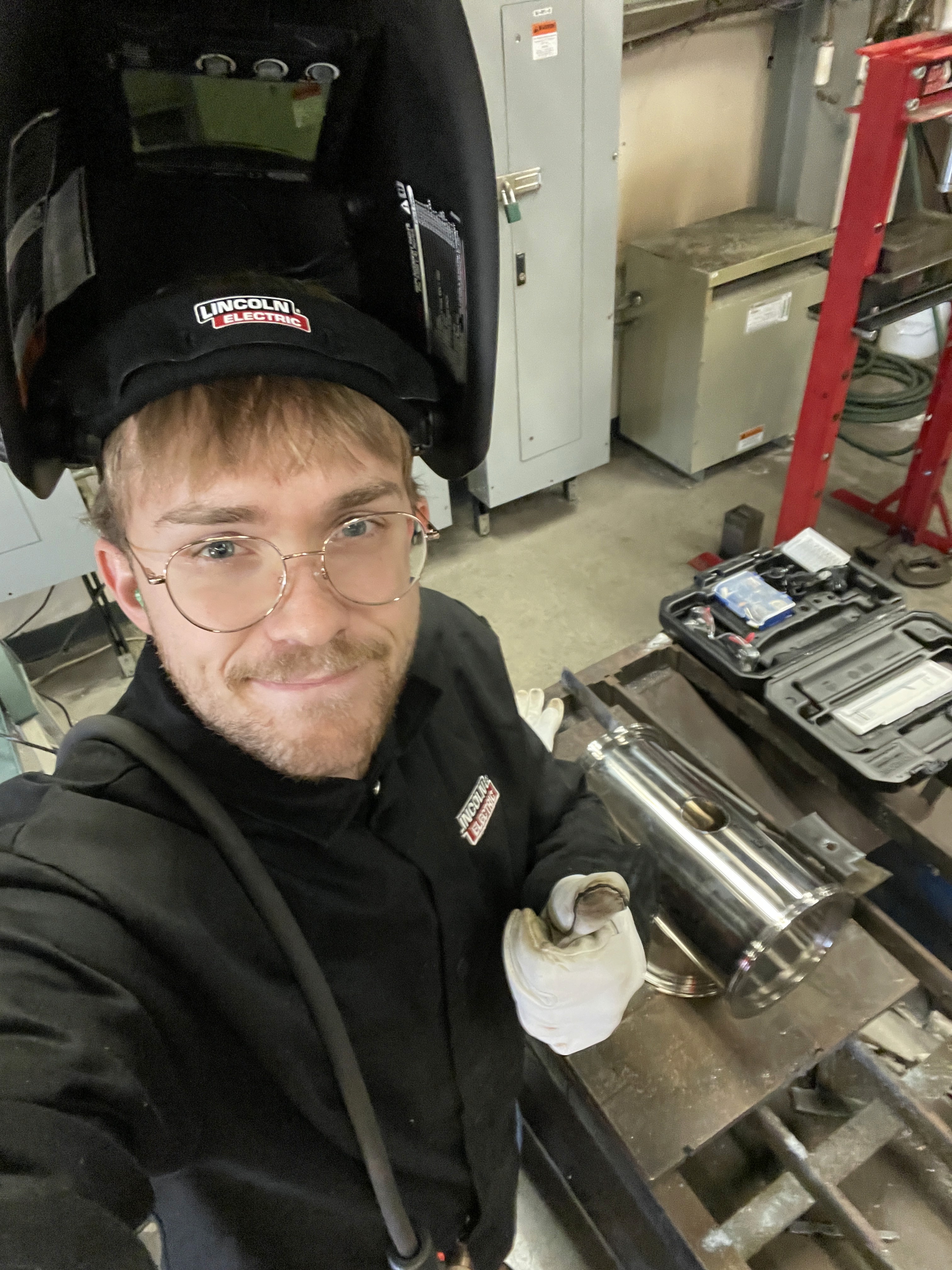
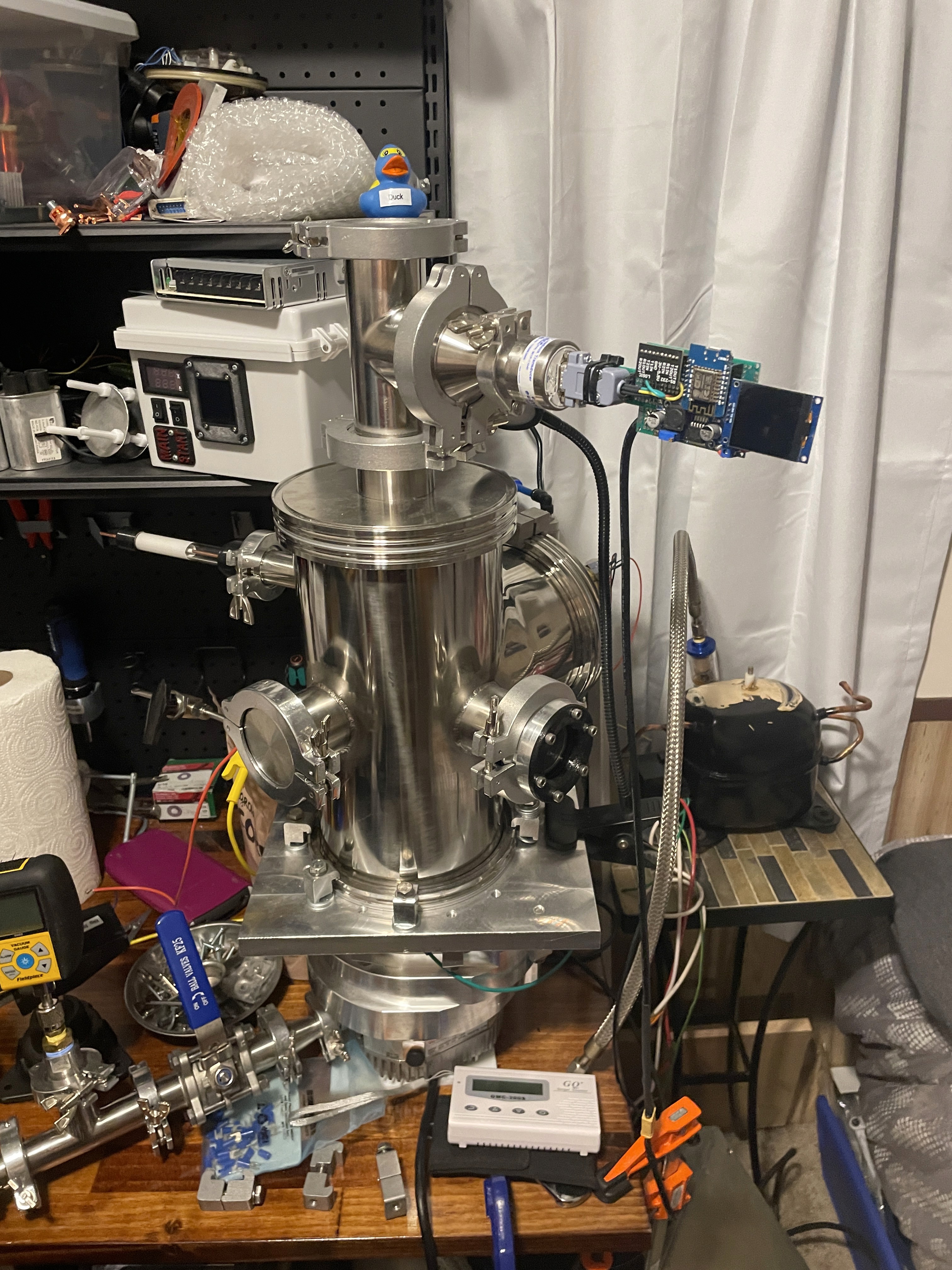
With the bulk construction complete, the chamber was ready to be used. However, it is nearly impossible to use a chamber without numerous feedthroughs. With most commercial feedthroughs costing >$100, my only option was to learn to make them myself. This topic is discussed in the below section
With the bulk construction complete, the chamber was ready to be used. However, it is nearly impossible to use a chamber without numerous feedthroughs. With most commercial feedthroughs costing >$100, my only option was to learn to make them myself. This topic is discussed in the below section