DIY High Vacuum Feedthroughs
DIY High Vacuum Feedthroughs
DIY High Vacuum Feedthroughs
Vacuum chambers aren't useful unless you can get stuff in and out.
Vacuum chambers aren't useful unless you can get stuff in and out.
First Designs
First Designs
First Designs
From my first simple mason jar vacuum chamber, it was immediately obvious that I would have to make my own vacuum feedthroughs. For me, this mostly meant needing to pass electrical signals or power through the chamber. The very first design simply relied on vacuum pressure to press a copper cap into a silicone gasket. The next, and much more leak proof, design was a copper wire epoxied to the glass itself, with the epoxy serving as the vacuum barrier.
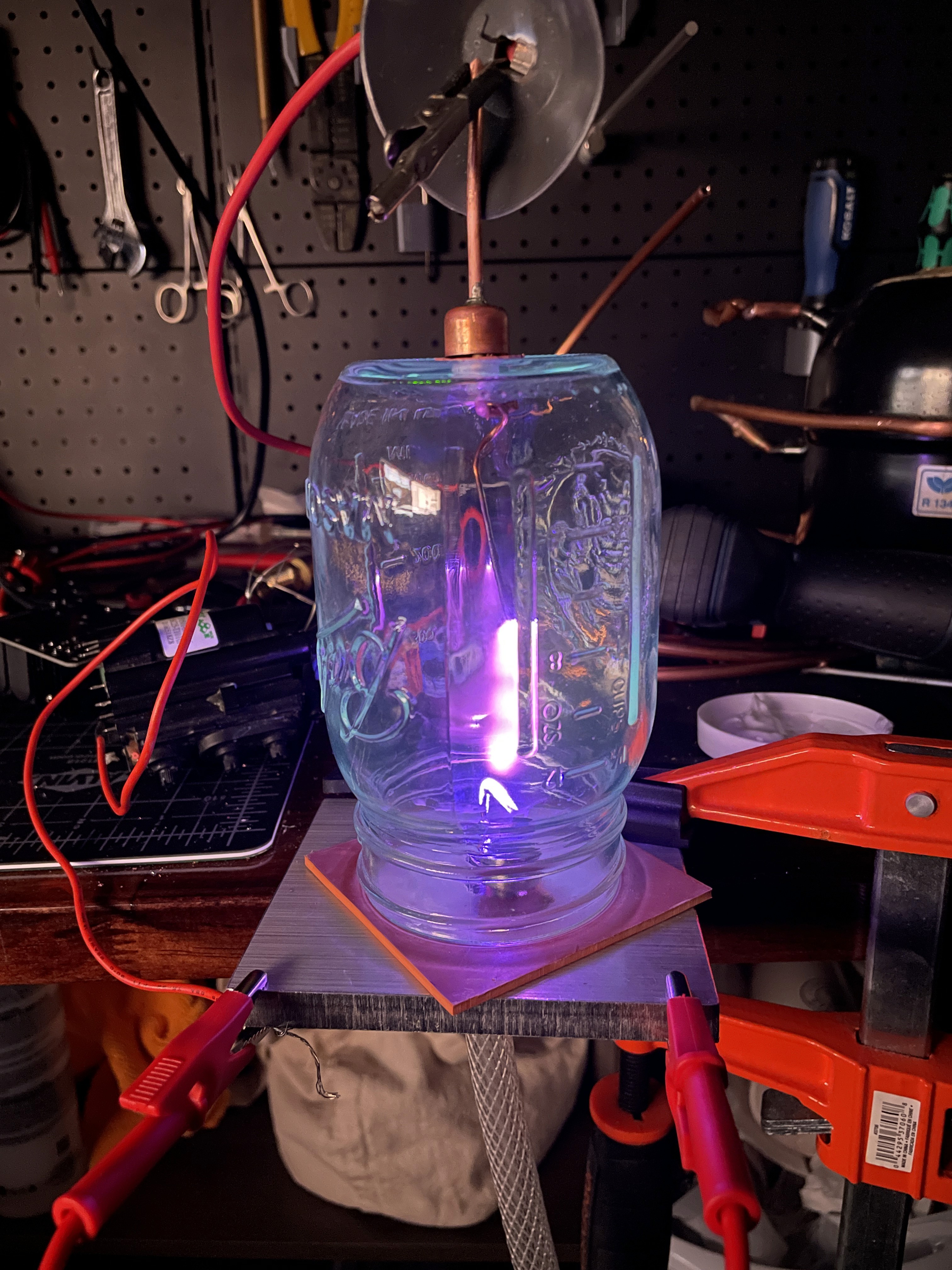
The first photo shows typical low pressure arc discharge with the relatively poor vacuum from a refrigerator compressor.
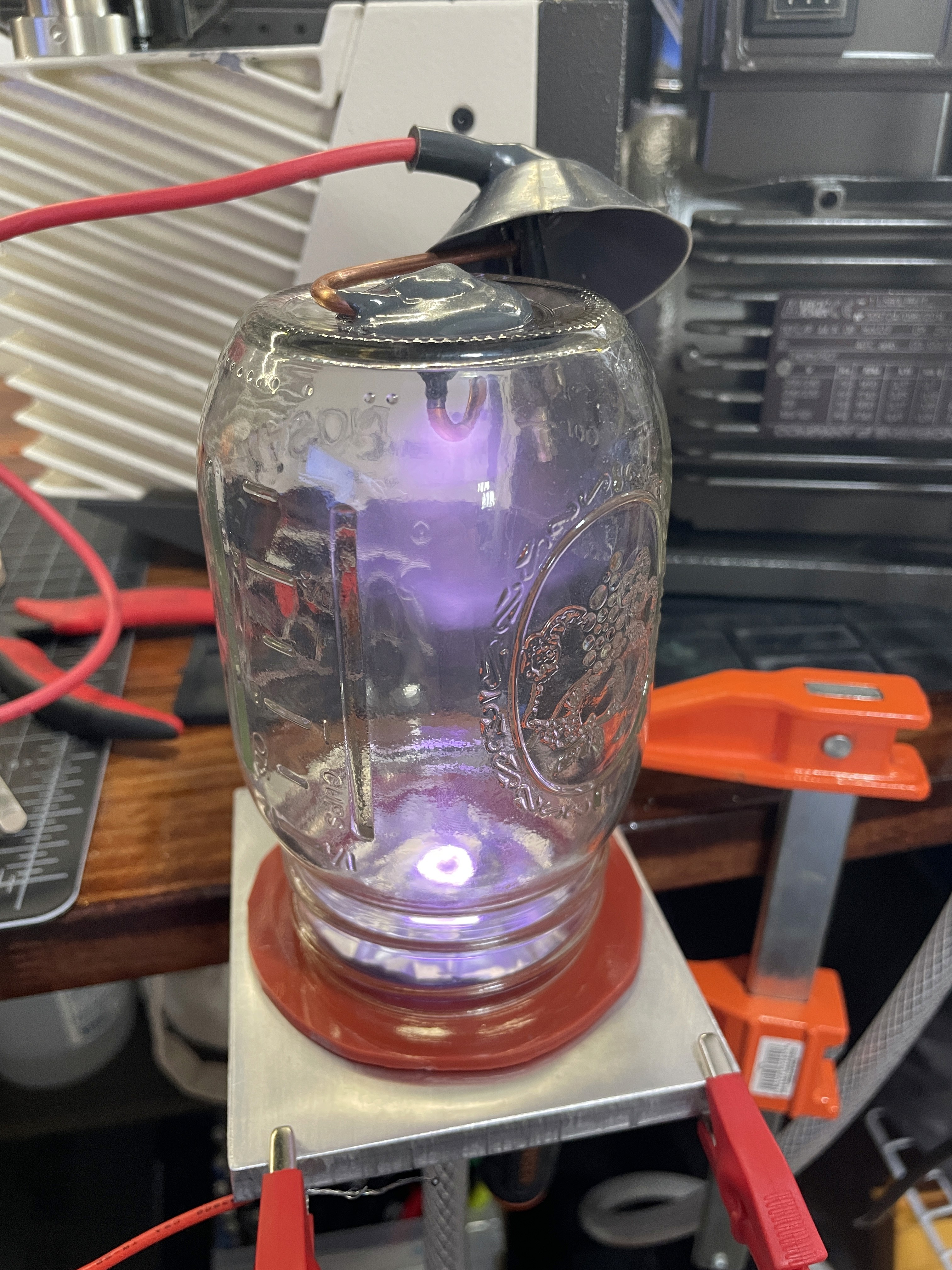
The second photo shows much dimmer discharge made with the better vacuum (still low vacuum) from my new rotary vane pump. Also visible is a circular discharge at the bottom. This was an early experiment with a ring of magnets to make a (very poor) magnetron sputtering setup.
From my first simple mason jar vacuum chamber, it was immediately obvious that I would have to make my own vacuum feedthroughs. For me, this mostly meant needing to pass electrical signals or power through the chamber. The very first design simply relied on vacuum pressure to press a copper cap into a silicone gasket. The next, and much more leak proof, design was a copper wire epoxied to the glass itself, with the epoxy serving as the vacuum barrier.
The first photo shows typical low pressure arc discharge with the relatively poor vacuum from a refrigerator compressor.
The second photo shows much dimmer discharge made with the better vacuum (still low vacuum) from my new rotary vane pump. Also visible is a circular discharge at the bottom. This was an early experiment with a ring of magnets to make a (very poor) magnetron sputtering setup.
From this point, the feedthroughs began to exponentially increase in complexity.
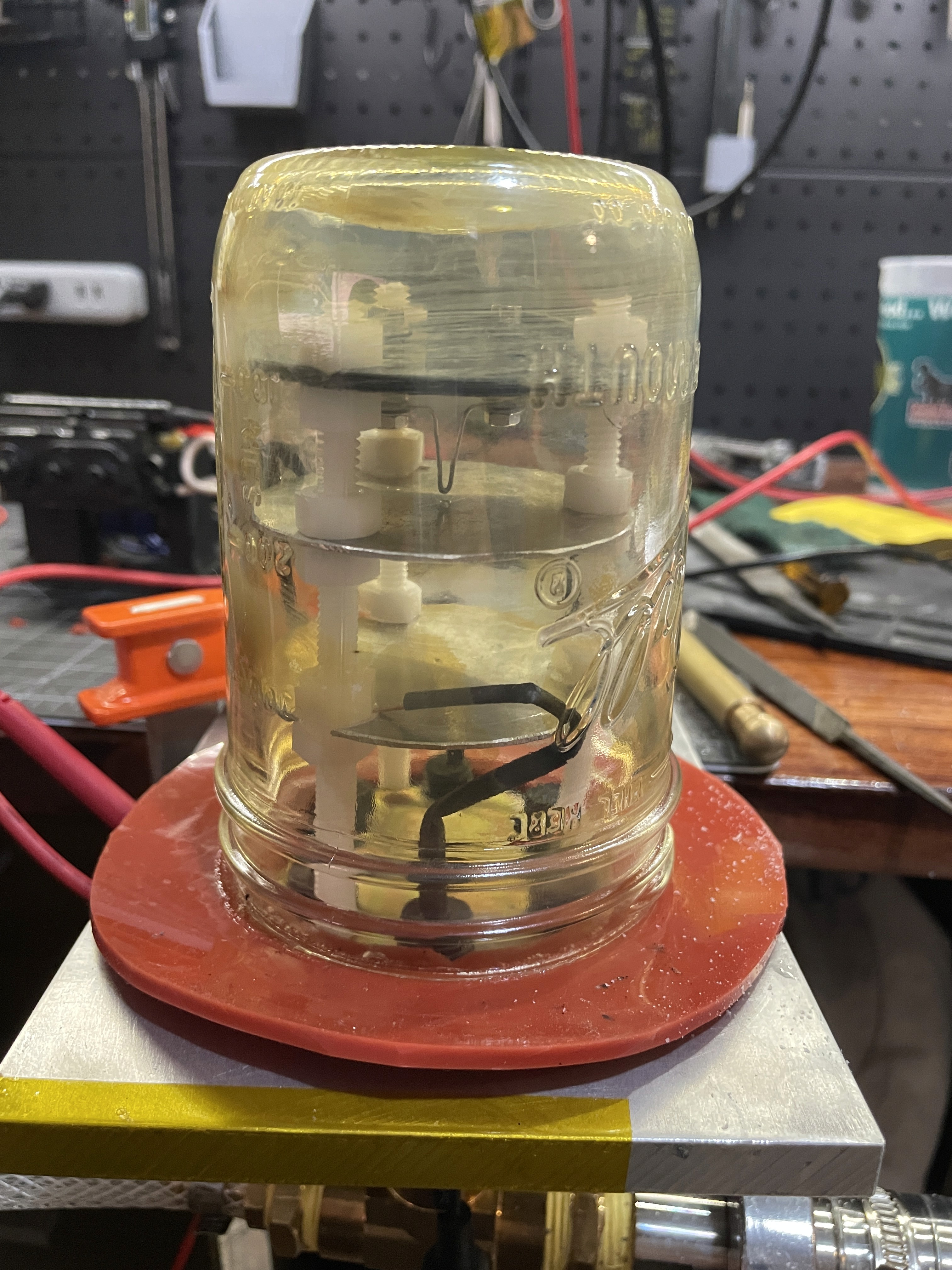
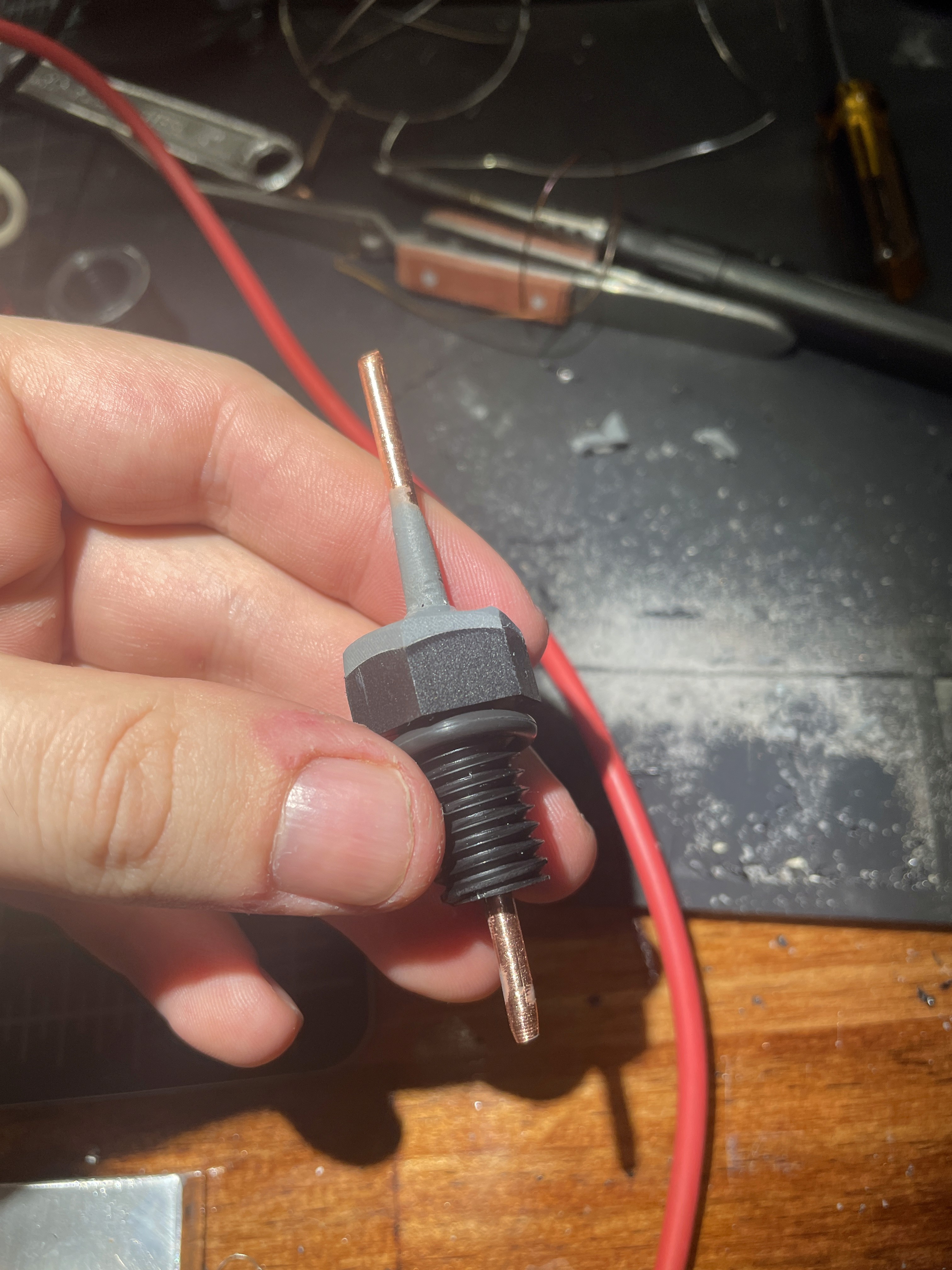
My next - still mason jar - prototype used threaded holes into the aluminum "cap" to have gasket-ed plugs thread in. Made from a delrin bolt with hole drilled through and copper wire epoxied into place, these were much more modular but had a tendency to leak due to the lack of constraint on the o-ring.
From this point, the feedthroughs began to exponentially increase in complexity.
My next - still mason jar - prototype used threaded holes into the aluminum "cap" to have gasket-ed plugs thread in. Made from a delrin bolt with hole drilled through and copper wire epoxied into place, these were much more modular but had a tendency to leak due to the lack of constraint on the o-ring.
First Standard Flange, Custom Feedthrough - 30 Pins KF40
First Standard Flange, Custom Feedthrough - 30 Pins KF40
First Standard Flange, Custom Feedthrough - 30 Pins KF40
After the middling success of these feedthroughs and the need for higher vacuums, the next step was making feedthoughs with standardized vacuum flanges. The KF flange type was settled on as ISO was generally too large and CF would be too costly with constant copper sealing ring expenditure.
The first of this next level of feedthrough was built into a KF40 stub and had the purpose of passing the full pinouts of two 15 pin D-sub (total of 30 conductors) connectors into the vacuum. To do this, the two conductors were attached to a 3d printed holder that would slot into the stub-end of the KF40 stub. This would hold everything in place but fully remain on the atmospheric pressure side. Individual enamel copper wire was then soldered to each pin to extend the conductors well into the vacuum chamber. With this all done, the whole vaccuum-side of the feedthrough was then vacuum-potted with epoxy to fully seal the feed through off. This method created a functional feedthrough that has been tested to <10^-5 torr.
After the middling success of these feedthroughs and the need for higher vacuums, the next step was making feedthoughs with standardized vacuum flanges. The KF flange type was settled on as ISO was generally too large and CF would be too costly with constant copper sealing ring expenditure.
The first of this next level of feedthrough was built into a KF40 stub and had the purpose of passing the full pinouts of two 15 pin D-sub (total of 30 conductors) connectors into the vacuum. To do this, the two conductors were attached to a 3d printed holder that would slot into the stub-end of the KF40 stub. This would hold everything in place but fully remain on the atmospheric pressure side. Individual enamel copper wire was then soldered to each pin to extend the conductors well into the vacuum chamber. With this all done, the whole vaccuum-side of the feedthrough was then vacuum-potted with epoxy to fully seal the feed through off. This method created a functional feedthrough that has been tested to <10^-5 torr.
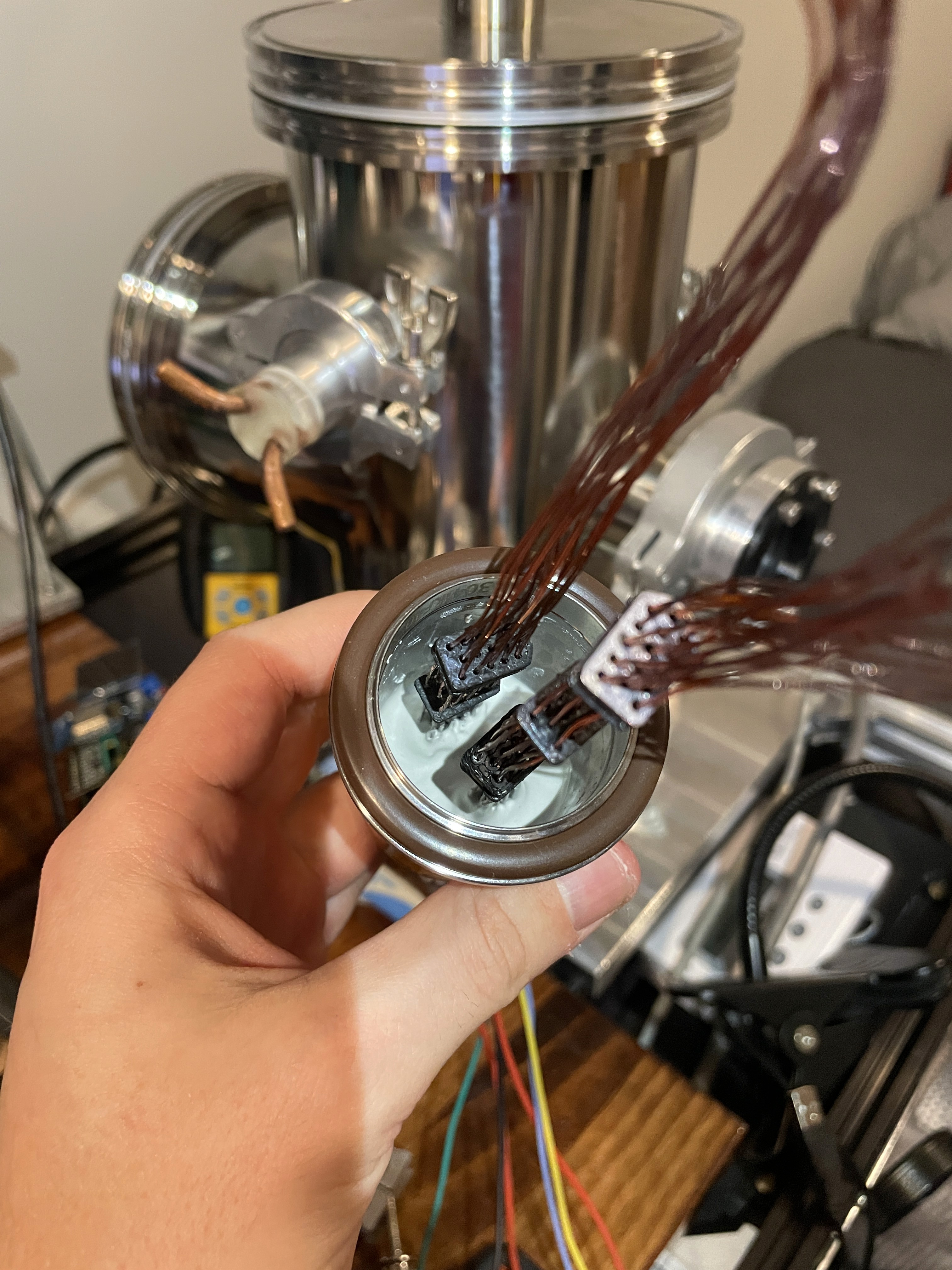
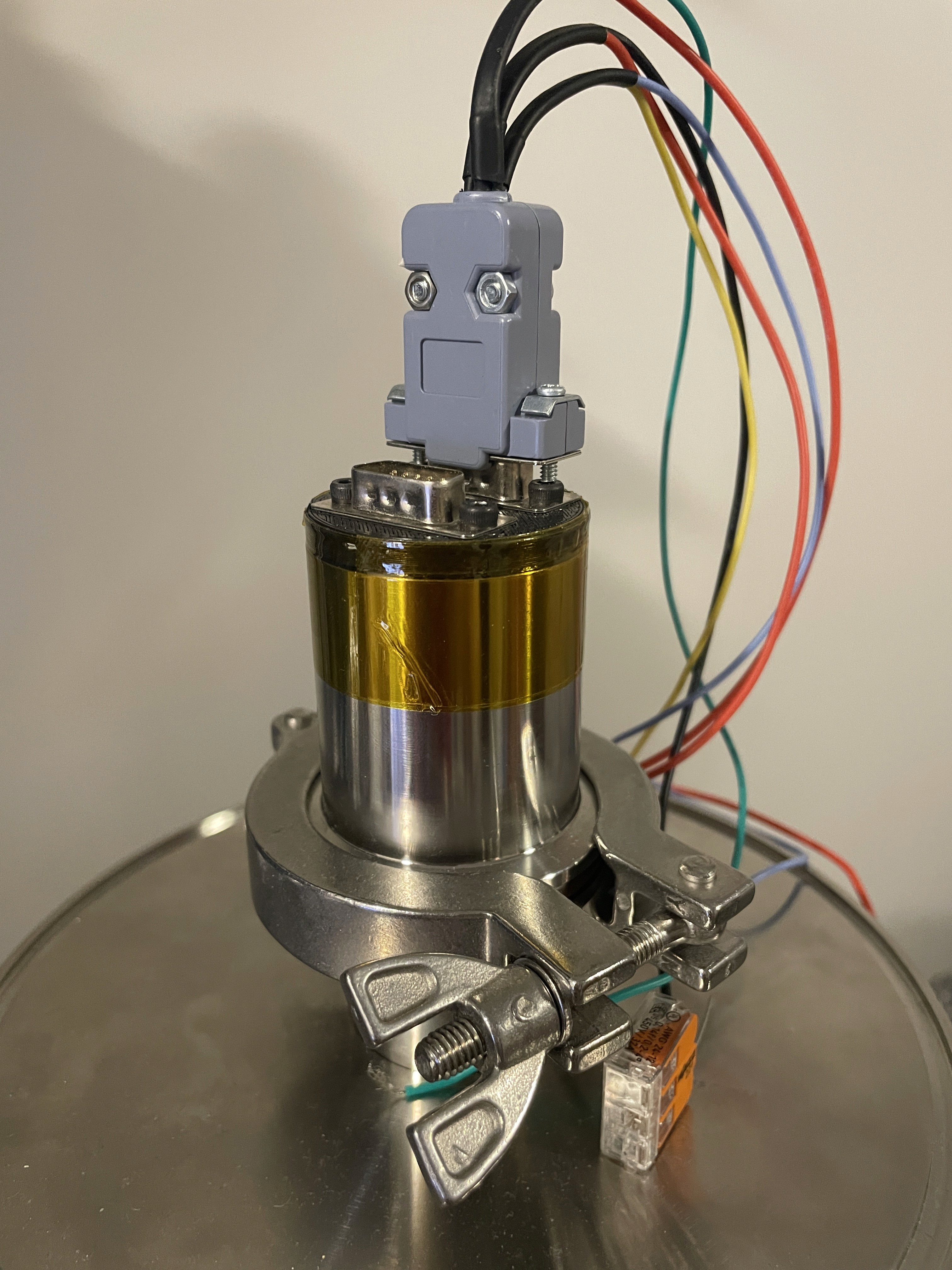
The abundance of pins was not immediately necessary, but was done to future proof the feedthrough. With this feedthrough I was able to insert a halogen light and webcam into the chamber. Though it would not survive long without a true thermal path, this allowed me to capture my first in-vacuum imagery.
The abundance of pins was not immediately necessary, but was done to future proof the feedthrough. With this feedthrough I was able to insert a halogen light and webcam into the chamber. Though it would not survive long without a true thermal path, this allowed me to capture my first in-vacuum imagery.
High-Voltage Insulated KF25 Feedthrough
High-Voltage Insulated KF25 Feedthrough
High-Voltage Insulated KF25 Feedthrough
With the 30 pin feedthrough design proving effective, I decided to step up the complexity again.
To do many interesting high vacuum experiments you need high voltage. This presents a conundrum as this high voltage will happily jump gaps and breakdown materials if allowed. My solution was to entirely isolate feedthrough body from the conductor by connecting them via a borosilicate glass tube. Conveniently, I already had some lying around from earlier attempts to create my own glass-tungsten bonds via glass blowing. This glass blowing was it's own project and did end in some success but was too difficult with a propane torch in my bedroom for anything complex.
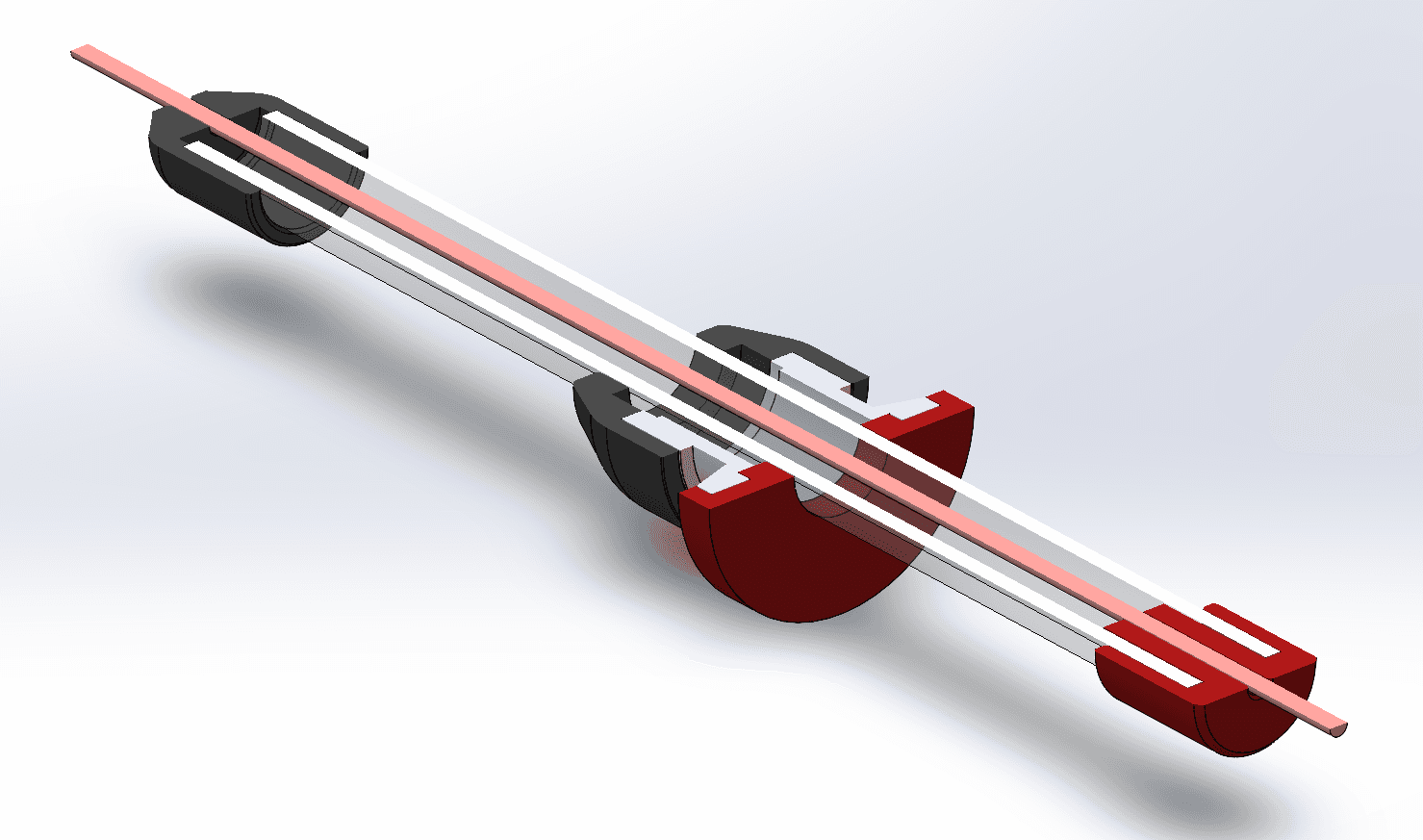
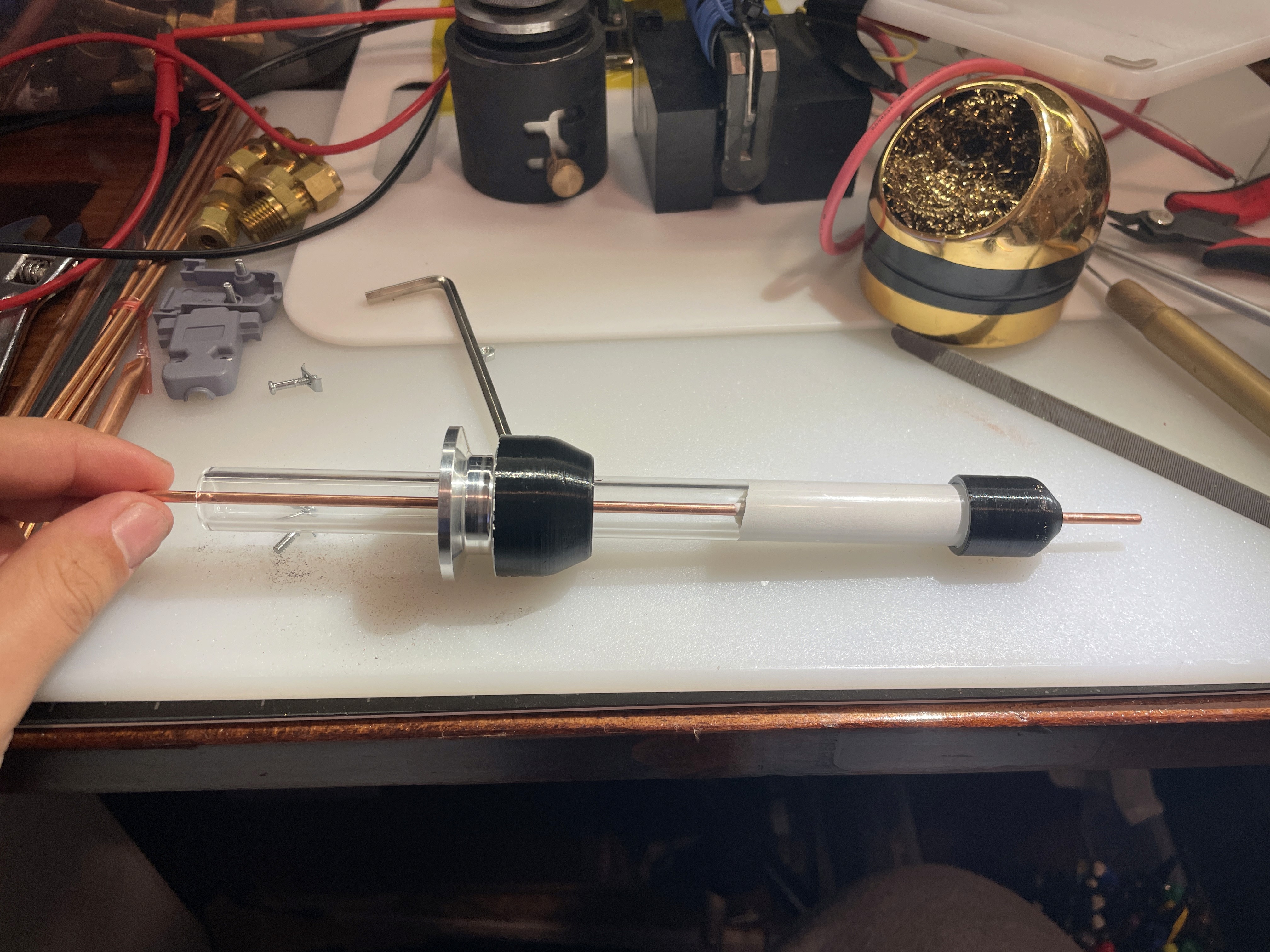
The design consists of a manually machined KF25 "blank" with a hole drilled through with sufficient room for the glass tube to pass through while surrounded by an epoxy bond. An 1/8" copper rod could then be bonded in the center of the feedthrough by an epoxy plug. Numerous 3D printed components were also used for temporary or permanent fixturing of components to ensure concentricity while also ensuring no printed part would ever touch vacuum. The choice of epoxy was also elevated to Hysol 1C, an epoxy known for its exceptionally low out gassing rates.
The below CAD model cross section shows the aluminum flange (gray), glass tube (white), copper rod, permanent 3d printed components (black), and temporary alignment components (red).
This feedthrough easily held vacuum with >20kV between the chamber and electrode.
With the 30 pin feedthrough design proving effective, I decided to step up the complexity again.
To do many interesting high vacuum experiments you need high voltage. This presents a conundrum as this high voltage will happily jump gaps and breakdown materials if allowed. My solution was to entirely isolate feedthrough body from the conductor by connecting them via a borosilicate glass tube. Conveniently, I already had some lying around from earlier attempts to create my own glass-tungsten bonds via glass blowing. This glass blowing was it's own project and did end in some success but was too difficult with a propane torch in my bedroom for anything complex.
The design consists of a manually machined KF25 "blank" with a hole drilled through with sufficient room for the glass tube to pass through while surrounded by an epoxy bond. An 1/8" copper rod could then be bonded in the center of the feedthrough by an epoxy plug. Numerous 3D printed components were also used for temporary or permanent fixturing of components to ensure concentricity while also ensuring no printed part would ever touch vacuum. The choice of epoxy was also elevated to Hysol 1C, an epoxy known for its exceptionally low out gassing rates.
The below CAD model cross section shows the aluminum flange (gray), glass tube (white), copper rod, permanent 3d printed components (black), and temporary alignment components (red).
This feedthrough easily held vacuum with >20kV between the chamber and electrode.
KF-50 Optical Feedthrough
KF-50 Optical Feedthrough
KF-50 Optical Feedthrough
One ability that I had wanted for a while on the chamber was some form of window into the chamber. However, this presents numerous issues. Any glass used must be able to withstand the full atmospheric pressure against its surface and the window must be designed so that it will seal while not being potentially damaged by uneven thermal expansion. An additional constraint I gave myself was that I wanted to be able to easily replace the window.
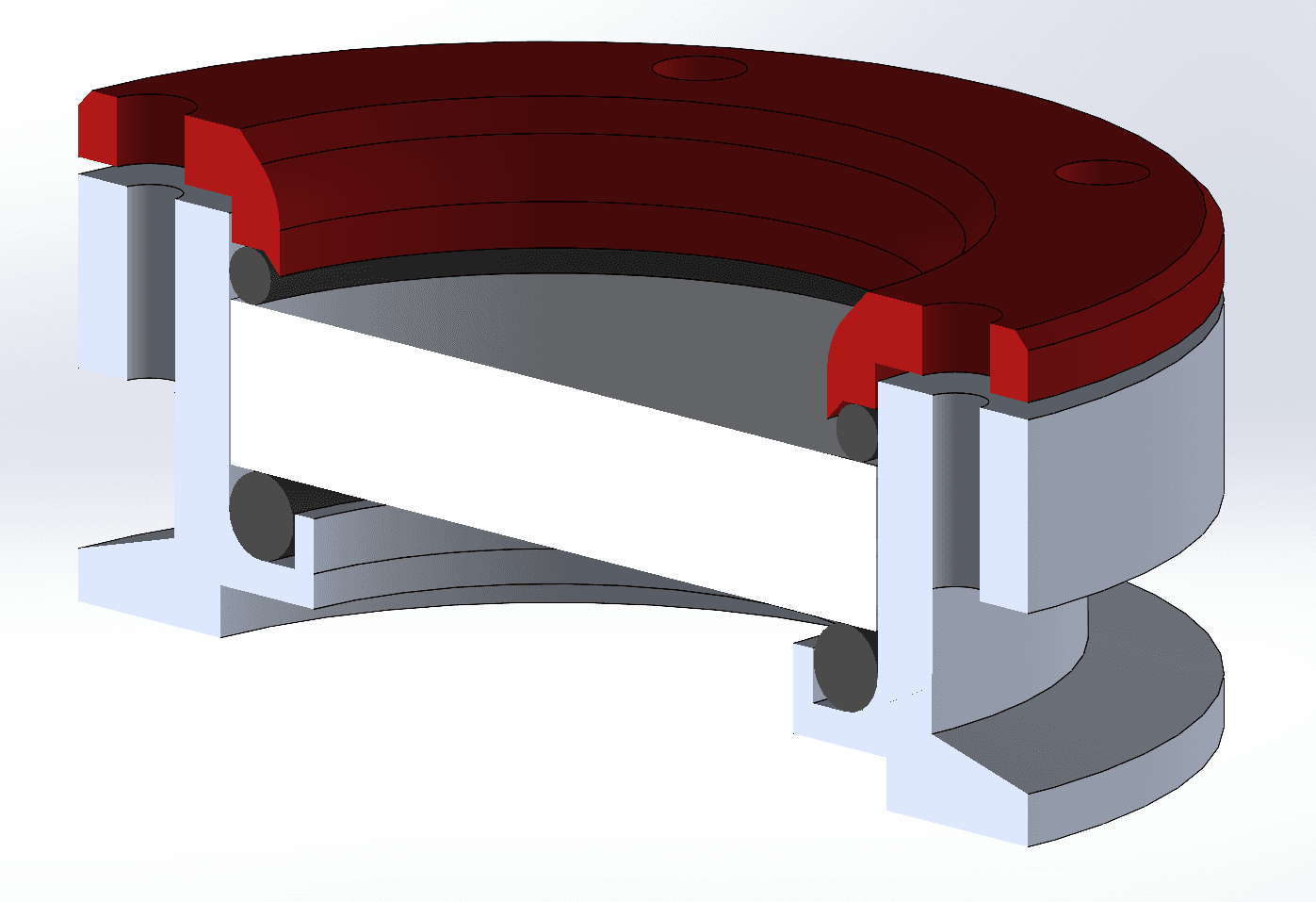
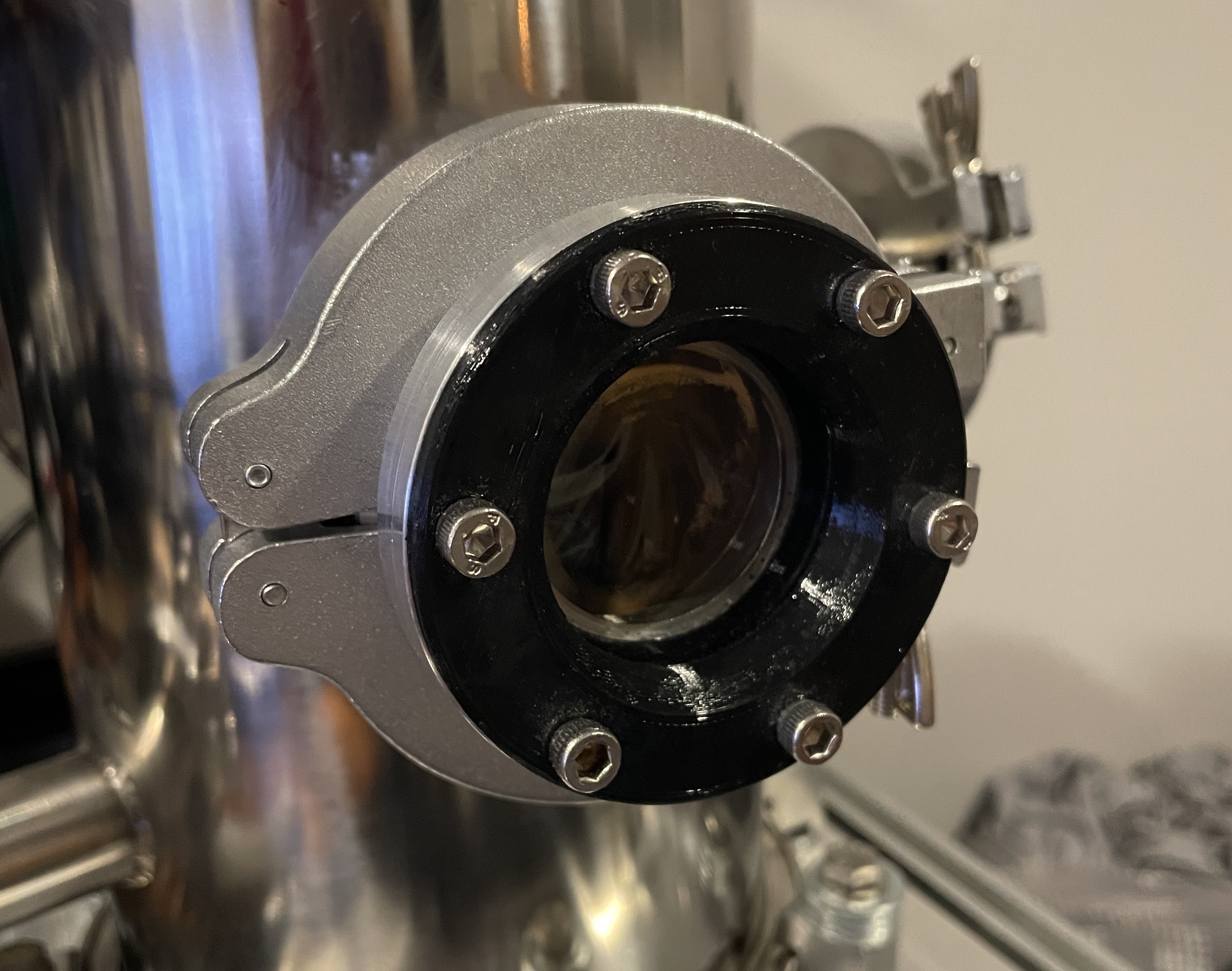
The chosen design used a turned aluminum flange body that the window could comfortably slot into. An o-ring sealed the window against vacuum with a small retaining ring to prevent the o-ring from moving out of the slot. The whole assembly is secured with a 3d printed flange that bolts into the aluminum body. It effectively holds vacuum and provides a window that nearly maximizes the potential area of a KF50 flange.
One ability that I had wanted for a while on the chamber was some form of window into the chamber. However, this presents numerous issues. Any glass used must be able to withstand the full atmospheric pressure against its surface and the window must be designed so that it will seal while not being potentially damaged by uneven thermal expansion. An additional constraint I gave myself was that I wanted to be able to easily replace the window.
The chosen design used a turned aluminum flange body that the window could comfortably slot into. An o-ring sealed the window against vacuum with a small retaining ring to prevent the o-ring from moving out of the slot. The whole assembly is secured with a 3d printed flange that bolts into the aluminum body. It effectively holds vacuum and provides a window that nearly maximizes the potential area of a KF50 flange.
KF-25 Dual Medium Current Feedthrough
KF-25 Dual Medium Current Feedthrough
KF-25 Dual Medium Current Feedthrough
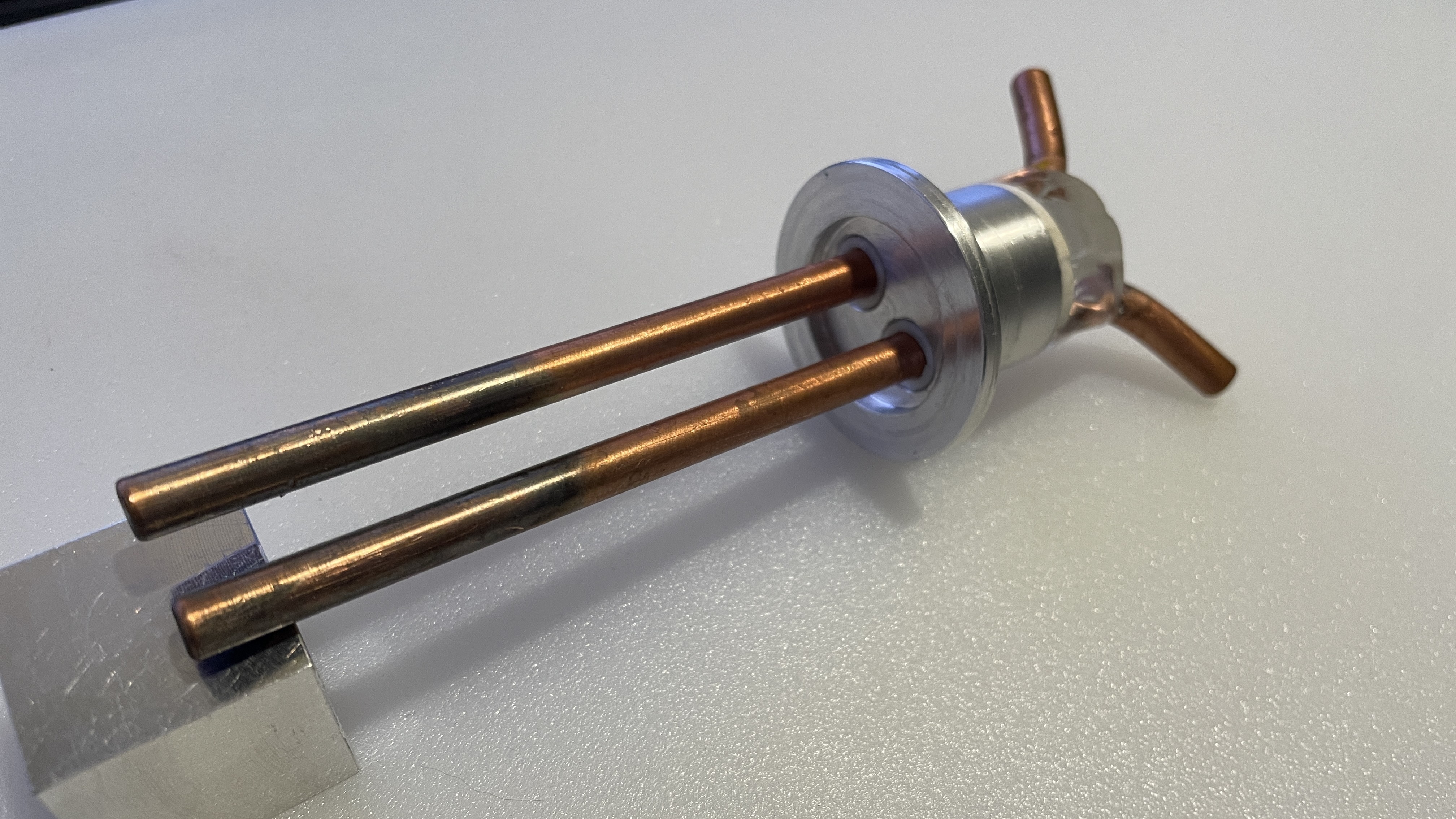
One ability that I would need for future projects was the ability to push high currents inside the chamber. This would necessitate fairly large conductors and, ideally, be able to tolerate the 10-20kV needed for a tungsten-filament based electron beam. This design was created from these requirements.
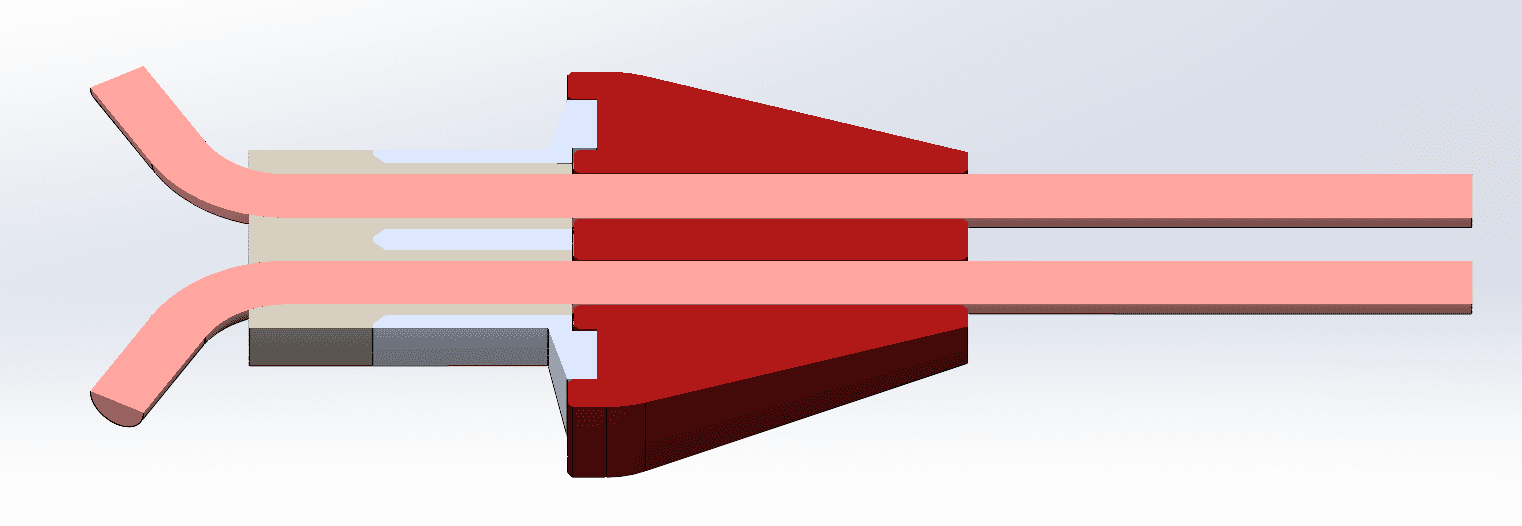
The body is turned aluminum with a KF-25 flange. Two 0.375" holes were drilled through so that two 0.25" copper rods could be passed through as the conductors. These were initially held in place with some custom turned PTFE bushings then potted with Hysol 1C-LV (the low viscosity formulation of Hysol 1C, difficult to find). 3D printed components (red) were used for alignment while the epoxy set. An additional pour of normal clear epoxy after the first pour to ensure that the electrodes were as spaced apart as possible.
One ability that I would need for future projects was the ability to push high currents inside the chamber. This would necessitate fairly large conductors and, ideally, be able to tolerate the 10-20kV needed for a tungsten-filament based electron beam. This design was created from these requirements.
The body is turned aluminum with a KF-25 flange. Two 0.375" holes were drilled through so that two 0.25" copper rods could be passed through as the conductors. These were initially held in place with some custom turned PTFE bushings then potted with Hysol 1C-LV (the low viscosity formulation of Hysol 1C, difficult to find). 3D printed components (red) were used for alignment while the epoxy set. An additional pour of normal clear epoxy after the first pour to ensure that the electrodes were as spaced apart as possible.
KF-16 High Current Feedthrough
KF-16 High Current Feedthrough
KF-16 High Current Feedthrough
Shortly after creating the KF-25 medium current feedthrough, I realized that I would need an even higher current feedthrough for my planned thermal PVD system. With expected peak currents exceeding 400A (provided by a rewound microwave oven transformer), I decided to design and build a feedthrough that would maximize conductor cross section on a KF-16 flange.
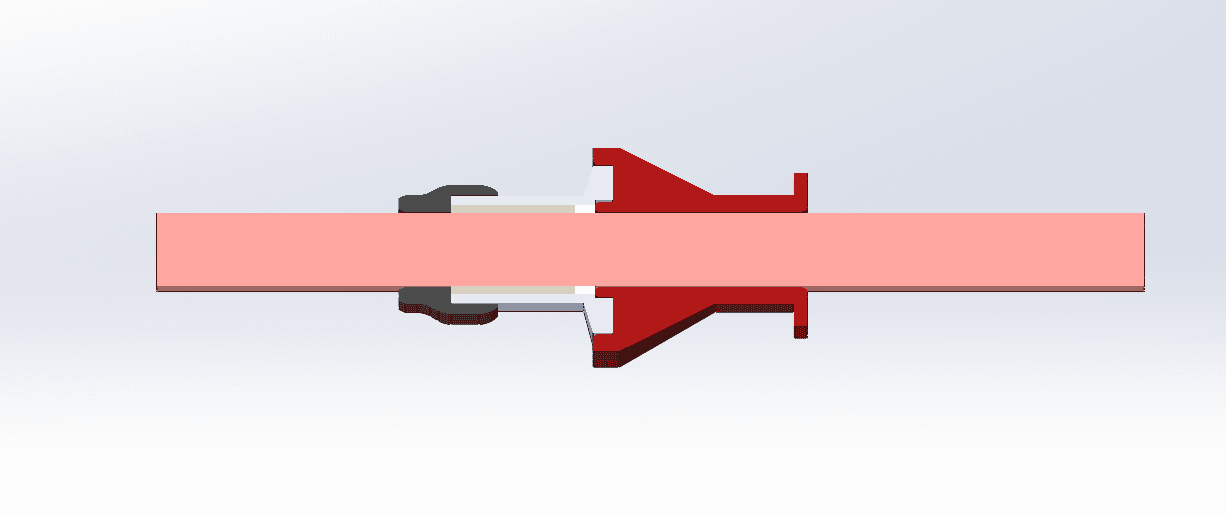
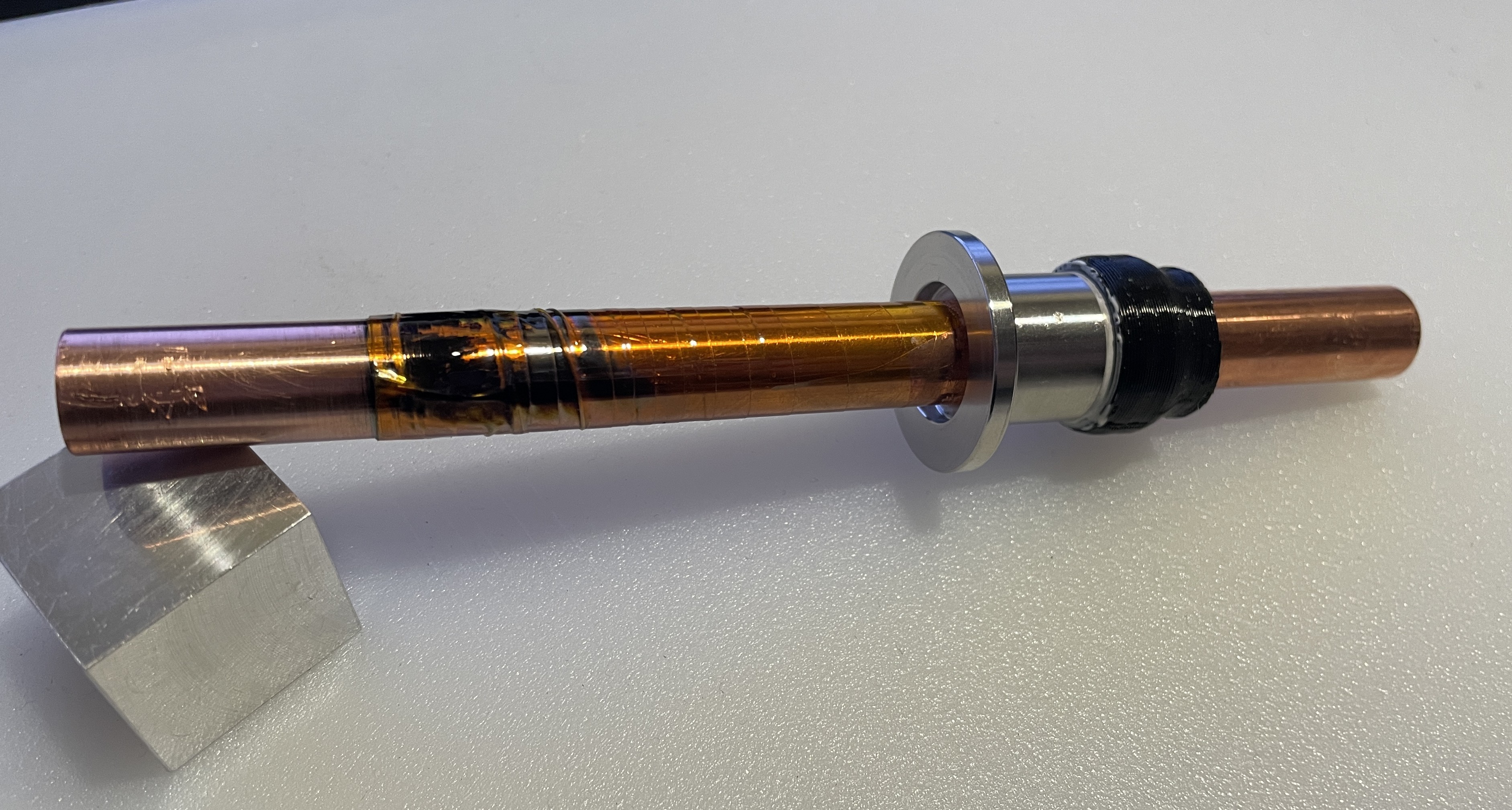
The finalized design uses a 0.5" diameter copper rod as the conductor inserted into a stainless KF-16 stub. This stub could have easily been made instead of bought, but I had already acquired numerous stubs for the PVD system's primary flange. The copper rod is spaced inside the stub with a custom machined PTFE spacer. A permanent 3D printed piece (black) acted to center the rod and cap off the epoxy pour. A temporary 3D printed piece (red) served as another tool to ensure concentricity.
At this point I had also found a reliable way of epoxy potting these components. The epoxy bottle was first lightly heated then mixed and put into a small, disposable plastic bag. This bag then had a corner removed to allow a small and highly directable flow of epoxy in tight (~1/16") gaps. A vibratory tool was used to encourage flow and the part was vacuum degassed in cycles to ensure no air pockets remained.
Shortly after creating the KF-25 medium current feedthrough, I realized that I would need an even higher current feedthrough for my planned thermal PVD system. With expected peak currents exceeding 400A (provided by a rewound microwave oven transformer), I decided to design and build a feedthrough that would maximize conductor cross section on a KF-16 flange.
The finalized design uses a 0.5" diameter copper rod as the conductor inserted into a stainless KF-16 stub. This stub could have easily been made instead of bought, but I had already acquired numerous stubs for the PVD system's primary flange. The copper rod is spaced inside the stub with a custom machined PTFE spacer. A permanent 3D printed piece (black) acted to center the rod and cap off the epoxy pour. A temporary 3D printed piece (red) served as another tool to ensure concentricity.
At this point I had also found a reliable way of epoxy potting these components. The epoxy bottle was first lightly heated then mixed and put into a small, disposable plastic bag. This bag then had a corner removed to allow a small and highly directable flow of epoxy in tight (~1/16") gaps. A vibratory tool was used to encourage flow and the part was vacuum degassed in cycles to ensure no air pockets remained.
Was building instead of buying worth it?
Was building instead of buying worth it?
Was building instead of buying worth it?
Yes.
Commerical off the shelf feedthroughs are highly reliable but even the simplest feedthrough on a KF flange will cost $150+. With the methods I used here, I was able to make nearly all of these individual feedthroughs for much less than $30.
For example, the high current feedthrough used scrap aluminum ($0), a copper rod (~$10 per feedthrough), a small amount of Hysol (~$30 for a bottle that could make >10 feedthroughs), a small length of PTFE rod (~$20 for a 8" long, 0.75" OD rod), and a negligible amount of 3D printed PETG.
With all of this said, their epoxy likely creates a small amount of outgassing and would certainly not be compatible with UHV. Future projects are planned to retry the making of glass-metal seals.
Yes.
Commerical off the shelf feedthroughs are highly reliable but even the simplest feedthrough on a KF flange will cost $150+. With the methods I used here, I was able to make nearly all of these individual feedthroughs for much less than $30.
For example, the high current feedthrough used scrap aluminum ($0), a copper rod (~$10 per feedthrough), a small amount of Hysol (~$30 for a bottle that could make >10 feedthroughs), a small length of PTFE rod (~$20 for a 8" long, 0.75" OD rod), and a negligible amount of 3D printed PETG.
With all of this said, their epoxy likely creates a small amount of outgassing and would certainly not be compatible with UHV. Future projects are planned to retry the making of glass-metal seals.